Temporal Variability and Predictability of Radio Refractivity in Four Selected Locations of Locations in Nigeria
Keywords:
Radio Refractivity, Recurrence Quantification Analysis, Hurst Exponent Lyapunov ExponentAbstract
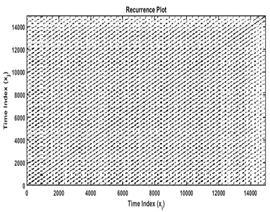
Radio refractivity strongly influences atmospheric propagation and communication system reliability, yet its nonlinear dynamics remain underexplored in tropical West Africa. This study investigates the spatiotemporal variability and predictability of radio refractivity across four locations in Nigeria, using daily meteorological data of temperature, pressure and relative humidity from 1982–2022. Nonlinear methods were applied, including recurrence plots (RP), recurrence quantification analysis (RQA) and nonlinear indicators such as the Hurst exponent and Lyapunov exponent. Results reveal a strong climatic changes, Sudan/Sahelian states (Sokoto, Kano, Yobe and Borno) exhibit sparse RP structures, high recurrence rates (RR of 1.55–2.1%) and high determinism (DET of 0.23-0.30) and Hurst exponents of (0.71- 0.72). Across all the four locations, the Hurst exponent (HE > 0.5, which is > HT) exceeded the theoretical Hurst exponent (HT) baseline (HT = 0.5), indicating persistent long range dependence to initial conditions, meaning every location shows more persistence than the near random theoretical value of Hurst exponent. While, small but positive Lyapunov exponents (0.0040–0.0045 per day), defines the signature of weak chaos, radio refractivity is deterministic and future evolutions can be completely correlated to past behaviour and the predictability horizons of 250–222 days. The findings demonstrated that radio refractivity is persistent and predictable, though strongly modulated by climatic conditions. These result improve the understanding of tropical atmospheric variability and provide a foundation for refining radio propagation models and long term communication planning in the selected regions.